Pi Day With Math Storybooks
Pi Day offers a perfect opportunity to bring mathematical concepts to life through engaging storybooks that make abstract ideas concrete for young learners. This article features recommendations from mathematics educators who have successfully used literature to teach ratio concepts and the magic of pi. Discover how books like Sir Cumference can transform math instruction and help students grasp the relationship between a circle’s diameter and circumference.
- Measure Ratios via Sir Cumference
- Host a Pi Readathon for Guests
- Draw Comics About Archimedes and Beyond
- Survey Global Circle Tales and Customs
- Craft Blackout Poems From Math Pages
- Design a Story Escape Room
Measure Ratios via Sir Cumference
We celebrate Pi Day with activities that make circles and ratios tangible for students. To spark interest, we use Sir Cumference and the Dragon of Pi, a story that turns the abstract concept of Pi into something fun and memorable. Students then move into hands-on exercises, measuring the circumference and diameter of objects, calculating the ratio, and seeing Pi appear in real numbers.
The activity can be extended by connecting it to formulas or real-world applications, like circular motion or design problems, giving students a deeper understanding of how Pi works beyond the page. Combining story, measurement, and practical application helps make the concept concrete, reinforces geometry and ratios, and keeps learning engaging and interactive.

Host a Pi Readathon for Guests
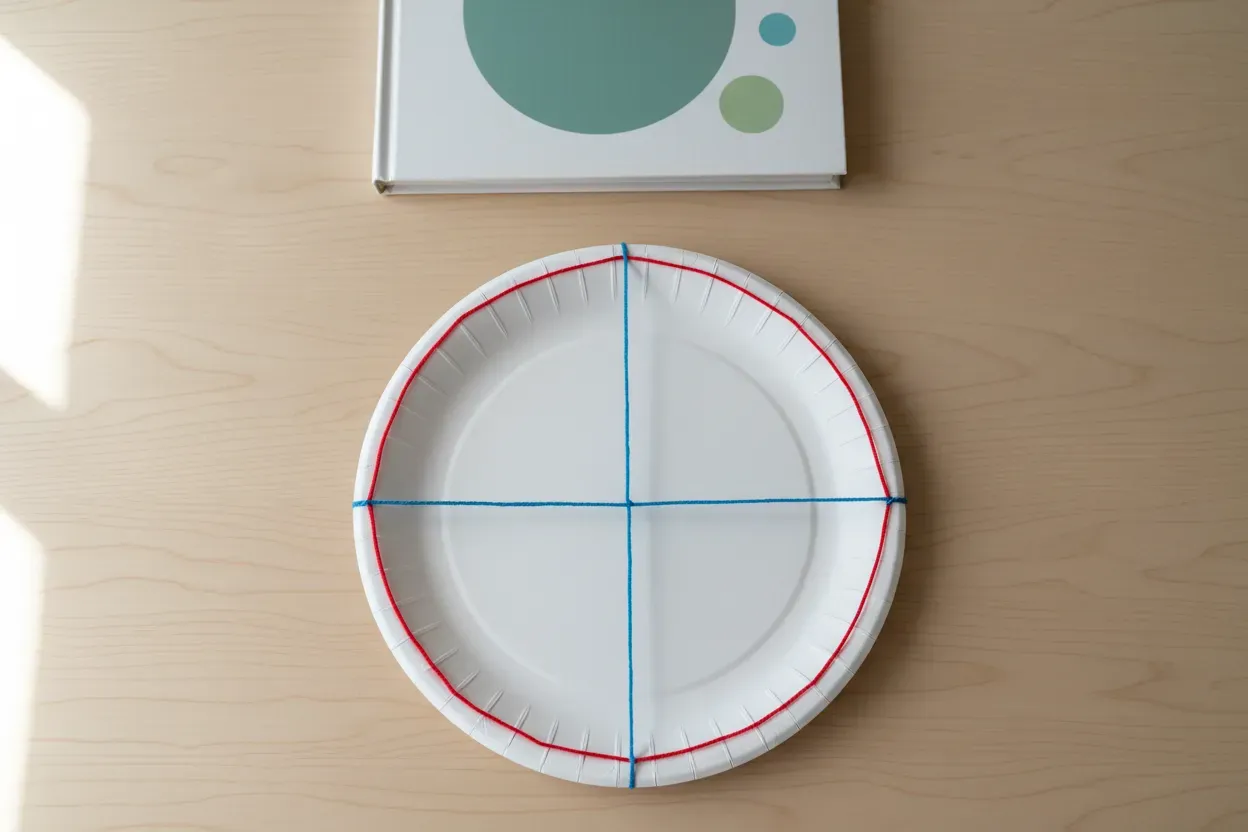
Include a cozy corner with circle rugs and simple crafts like paper plate pies. Track minutes read on a wall chart shaped like a giant circle to keep energy high. Sign up to read a story and make Pi Day a page-turning event.
Draw Comics About Archimedes and Beyond
A simple storyboard helps writers plan a problem, a trial, a mistake, and a clever fix. Each strip ends with a small fact box that checks accuracy and names the source tale. Pick a story path and draw a pi comic that brings discovery to life.
Survey Global Circle Tales and Customs
Talk about how each story links circles to ideas like unity, time, or travel. Compare the math words used and how authors explain size, radius, and loops. Start a world wall of circles and share a favorite book from a new place.
Craft Blackout Poems From Math Pages
Each poem can be limited to 31 or 41 words to echo digits of pi in a playful way. Finished pieces can hang in a gallery line so others can walk by and read. Bring markers and pages, and craft a pi poem today.
Design a Story Escape Room
Each solved task opens a new box or reveals a key phrase that pushes the story forward. A time limit adds thrill, and a final wrap-up talk ties each puzzle back to the book. Gather props and friends, and break out of the Pi Day room.