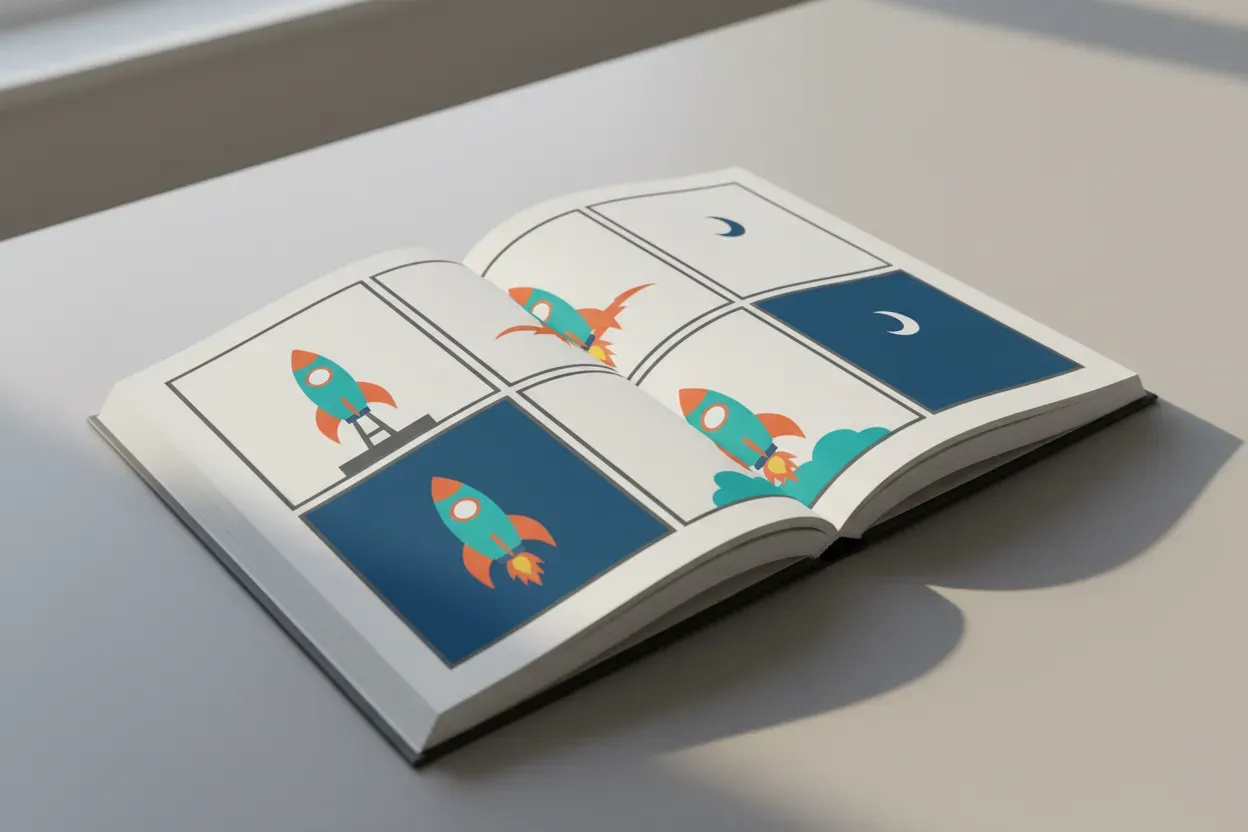
How to approach graphic novels and comics when a child prefers visual storytelling
Many children gravitate toward graphic novels and comics because pictures help them process information more effectively than text alone. This article provides practical strategies for parents and educators who want to support young readers who learn best through visual formats. These methods are informed by expert recommendations from literacy specialists who work with visual learners every day.
- Invite Choice to Spark Reader Confidence
- Harness Panel Pauses for Skill Growth
- Favor Short Lessons with Active Retells
- Start with Wordless Books and Prediction
- Explain Comics Grammar and Page Flow
- Match Interests with Varied Graphic Genres
- Ask Experts for High Quality Right Fit Titles
- Discuss Art Elements to Deepen Insight
Invite Choice to Spark Reader Confidence
When a child prefers visual storytelling, I lean in — not away from it. As a former special education teacher and now a children’s publisher for 40 years, I’ve seen how powerful graphic novels and comics can be for building confidence and comprehension.
In fact, my own first love of reading came through comic books. As a young child, I spent my 15-cent weekly allowance rushing to the local pharmacy to find the newest comic book on the rack — and still have a few cents left for a piece of candy. Those stories felt exciting, and I couldn’t wait to see how the adventure would continue.
In our own graphic novel, Story Monsters Among Us, written by Conrad J. Storad and illustrated by Jeff Yesh, we intentionally use images to carry action and emotion while the words provide context, vocabulary, and motivation. When pictures and text work together thoughtfully, young readers are able to follow the story visually and then connect that experience to language.
When a graphic novel has a comic-like feel within a storybook format, children instantly step into what feels like the familiar and exciting world of comic books. That sense of familiarity lowers barriers and sparks curiosity. And when children are given a choice between a traditional text-heavy book and a graphic novel format, many will naturally reach for the graphic novel first. That choice is not about avoiding reading — it is about gravitating toward an accessible and engaging entry point.
Bringing the Story Monster character intentionally into the pages of a graphic novel also deepens that connection. For years, children have embraced Story Monster — whether through a puppet, a mascot appearance, or in print. When that familiar character comes to life within a graphic format, it creates continuity and trust. Children feel as though they are stepping into a world they already know.
At Story Monsters, we’ve seen a noticeable shift when children are given visual formats to embrace. Engagement increases. Curiosity deepens. Most importantly, readers begin connecting images to language in meaningful ways. Over time, that connection strengthens vocabulary, sequencing skills, and overall comprehension.
Graphic novels are not a shortcut — they are a bridge. And for many children, that bridge leads to a lifelong love of reading.

Harness Panel Pauses for Skill Growth
I’m an LPC-Associate and LCDC with 14 years as a clinician specializing in trauma/addiction, and I use CBT/DBT/ACT/Narrative daily–so I treat visual storytelling as a regulation + meaning-making tool, not a “lesser” reading format. When a child prefers comics, I start by mapping what the visuals do for them (predictability, emotion labeling, pacing, sensory load) and build therapy/learning goals around that.
Practically, I use a “panel pause” approach: after 2-3 panels, the child identifies the character’s thought (CBT), names the feeling + body cue (mind-body connection), and chooses an action alternative (DBT skill like STOP or opposite action). Then we do a quick “reframe caption” where they rewrite one speech bubble to practice healthier self-talk.
I’ve seen engagement jump most in kids with ADHD/anxiety or trauma histories because the art lowers the cognitive load of decoding long text and increases tolerance for staying with the story. One teen with TBI + ADHD + depression/substance use (parent shared this in a testimony) could stay present longer when sessions used visual pacing; their comprehension improved because they could retell sequences in order and accurately infer emotions from facial expressions without getting flooded.
If you want a concrete starting point, I like *Dog Man* for younger kids because the humor keeps arousal low while still giving clear cause/effect and emotion cues. Once they’re comfortable, I “ladder” upward by pairing the graphic novel with one short paragraph of prose that describes the same scene, so they practice translating images into words without losing momentum.

Favor Short Lessons with Active Retells
I treat graphic novels and comics as “living books,” using short, focused sessions where the child reads and then retells or sketches a scene in their own words. I encourage narration aloud, drawing, or a brief written summary so the child processes the story in their preferred visual way. Keeping lessons to about fifteen to twenty minutes helps avoid boredom and keeps attention active. After embracing these formats I have seen greater engagement and more accurate retelling of key ideas, which supports different learning styles while preserving the joy of reading.

Start with Wordless Books and Prediction
Point to faces and body language to name feelings and motives. Later, add easy graphic texts so captions and speech bubbles layer onto the skills built with pictures. Pick one wordless comic tonight and ask the child to narrate the next panel.
Explain Comics Grammar and Page Flow
Trace the path of speech bubbles to follow who talks first. Compare a tight close-up to a wide shot to notice how focus and mood shift. Open a comic together and talk through the panel flow from start to finish today.
Match Interests with Varied Graphic Genres
Rotate formats so the child sees that visual reading can teach, comfort, and thrill. Use this mix to build reading stamina and taste, not just one favorite series. Ask the child to pick one new genre this week and talk about what worked.
Ask Experts for High Quality Right Fit Titles
Local booksellers can also steer families toward fresh voices and hidden gems. Use short previews to check tone, language, and themes before a full read. Visit a library or bookstore this weekend and ask for two graphic novels that fit the child.
Discuss Art Elements to Deepen Insight
Notice symbols that repeat and ask what they might stand for. Invite the child to point to a panel as proof for each claim. Choose a scene tonight and discuss how the art builds the theme.