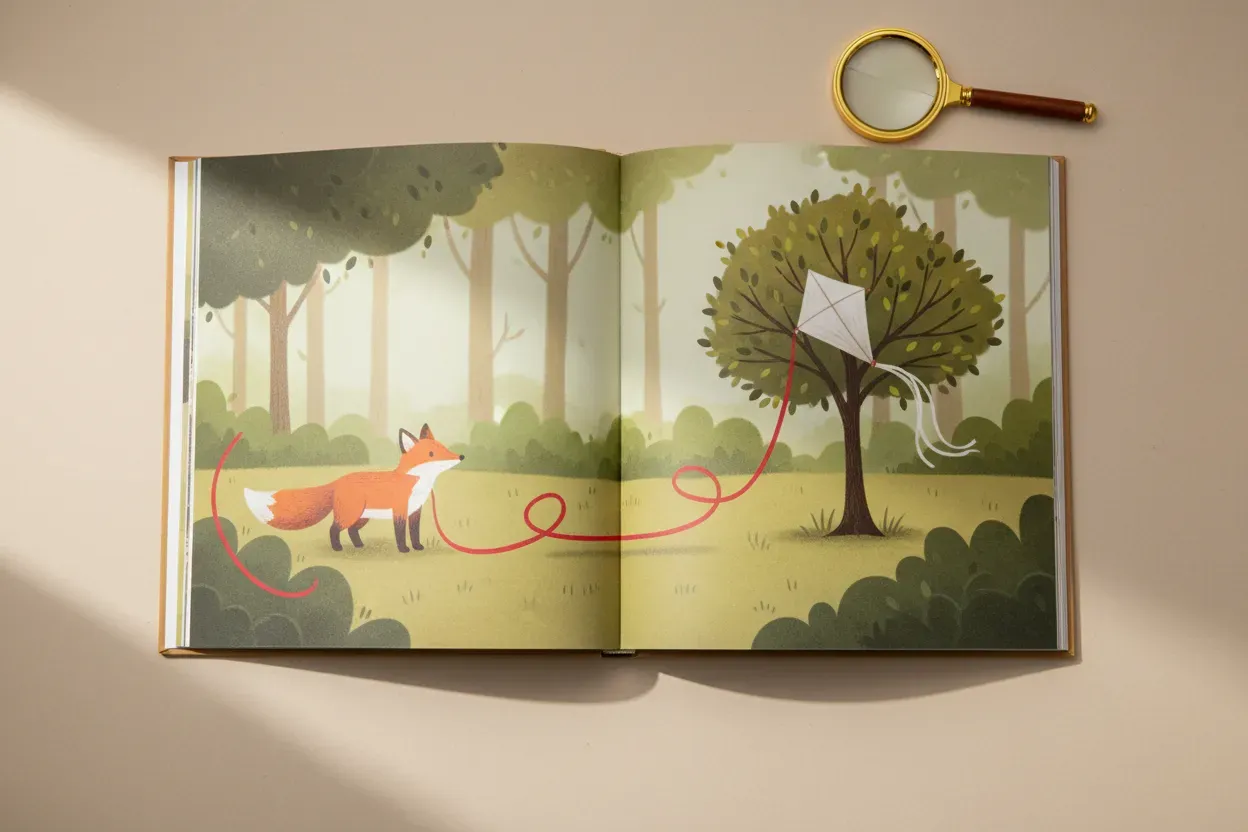
Unlocking Stories in Wordless Books
Wordless books offer children a unique opportunity to develop critical thinking and storytelling skills through visual interpretation. This article explores three practical strategies that parents and educators can use to help young readers create rich narratives from pictures alone. Drawing on insights from literacy experts and experienced educators, these approaches transform silent pages into powerful learning experiences.
- Ask About Emotions to Unlock Journey Inference
- Let Children Lead with Flotsam Questions
- Guide Tales via Structured Tuesday Prompts
- Create Drama through Sound and Mime
- Build Storyboards to Clarify Plot Arcs
- Read Panels Angles Colors for Insight
- Add Captions and Bubbles to Reveal Voice
- Trace Motifs to Uncover Deep Themes
Ask About Emotions to Unlock Journey Inference
Oh, this is my absolute favorite topic! Wordless books are magical for developing narrative skills because kids have to become the storytellers themselves.
My go-to title is “Journey” by Aaron Becker. The illustrations are stunning, and there’s so much happening on each page that every reading can be different. The prompt that really unlocked rich storytelling with my own kids was asking, “What do you think she’s feeling right now?” instead of “What’s happening?” Feelings-based prompts get kids to infer motivation and internal states, not just describe action.
With my youngest, who was about four at the time, we’d also do a “noticing walk” through the book first. I’d ask her to point out small details, like the red crayon on the floor or the bird in the corner. Then, on the second read, those details became part of her story. She started making connections like “Maybe the bird is following her to help” or “She drew the door because she was lonely.” That’s inference in action, and it came from her, not from me telling her what the story meant.
I also love doing different voices for different pages to model how tone and pacing change the narrative. Sometimes we’d tell it like an adventure story, sometimes like a quiet, reflective journey. It shows kids that the same images can support different storytelling styles.

Let Children Lead with Flotsam Questions
Picture books without words are most effective when adults leave the storytelling to the children and they own their stories. The teachers in Sunny Glen Children Home tend to sit close to the pre-readers and read one page at a time, taking ample time to allow children to observe information on their own. The thinking remains on what they watch, what they believe is going on, as well as what could be next. Among the favorite titles there is Flotsam that opens the door to layered storytelling, but does not need any reading skills. The word that opens the narrative most is a simple word that is used everywhere in the book: “What.” What did you think had happened just before this picture? Those questions force kids to make guesses, chronicle events, and think out loud. In a couple of sessions, children start to add their emotion, motive, and dialogue themselves. New images began to emerge and they begin revising previously held ideas. Such transformation reflects the increasing narrative control and elastic thinking, without any pressure. Wordless books allow children to have the freedom to trust their voice initially, and this creates a solid lead in their future reading and writing.

Guide Tales via Structured Tuesday Prompts
Wordless picture books build oral narrative and inferencing skills by inviting children to describe images, sequence events, and explain characters’ feelings and motives. Use short, consistent prompts that ask who is in the picture, what they are doing, why they might be doing it, and what comes next to guide responses without supplying the story. One favorite title is Tuesday by David Wiesner, whose surreal, detailed spreads prompt imaginative explanations and cause-and-effect reasoning. A simple prompt that often unlocked rich storytelling was: “Choose one character on this page and tell me where they just came from, how they feel, and what will happen to them next.”

Create Drama through Sound and Mime
Changing tempo from hush to rush guides tension across a scene. Group roles let many voices blend into a richer tale. Gather a few people and stage one spread with layered sounds and clear gestures today.
Build Storyboards to Clarify Plot Arcs
Arrows and small notes can mark time moves or links between moments. This plan helps a reader predict what comes next or retell what just happened. Sketch six frames for one scene and map the rise, the peak, and the change today.
Read Panels Angles Colors for Insight
Even the empty space between panels marks jumps in time and thought. Tracing eye paths from left to right or in a zigzag can uncover hidden links. Open a spread and name the panel shape, angle, and color that guide the scene, then say what they suggest now.
Add Captions and Bubbles to Reveal Voice
Letter size and style can hint at volume and mood without taking over. Drafts can be moved or trimmed until each word earns its space. Pick one page and script it with a few tight captions and bubbles, then read it aloud now.
Trace Motifs to Uncover Deep Themes
Links between two motifs can also suggest a conflict or bond. Writing a short theme line becomes easier once the pattern is clear. Scan the book for one repeating image and explain how its meaning deepens from start to finish today.